


Leeds boasts a vibrant theatrical history, with theatre serving as a popular form of entertainment for residents and visitors alike. Theatre not only provides entertainment but also encourages reflection, relaxation, and inspiration. Among the city’s many theatres, Leeds Playhouse stands out as a prominent venue located in the heart of Leeds. Opened in the late 20th century, Leeds Playhouse has become a cornerstone of the city’s cultural life. Next on leeds-trend.com.
The History of Leeds Playhouse
Leeds Playhouse traces its origins to the Leeds Playgoers’ Society, which was established in 1907 as a branch of the Leeds Arts Club. The society staged plays by renowned playwrights such as Shaw, Ibsen, and Chekhov.
Discussions about the creation of Leeds Playhouse began in 1964, when the idea of a modern theatre in Leeds first emerged. However, the Leeds City Council initially opposed the proposal, citing the existing Grand Theatre as sufficient. Public support for the project grew, culminating in a protest outside Leeds Town Hall. Citizens raised £20,000, with the City Council eventually contributing an additional £25,000, making the project feasible.
In 1970, the first Leeds Playhouse opened at the University of Leeds. By 1990, it had relocated to the Quarry Hill district and was renamed the West Yorkshire Playhouse. The new venue, built at a cost of £13 million, was inaugurated after its foundation was laid in 1989.
In 2018, the theatre reclaimed its original name, Leeds Playhouse.
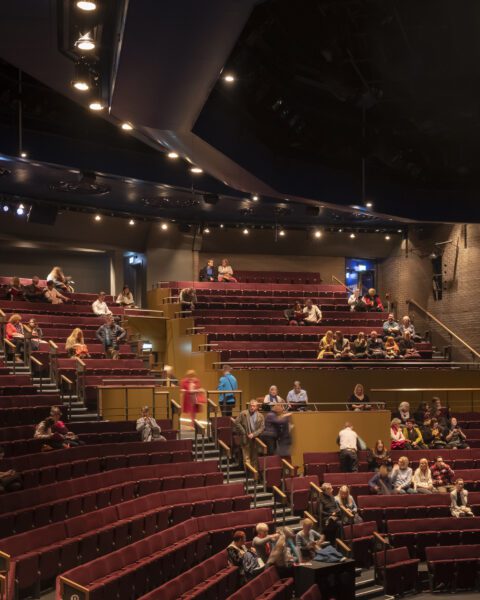
Leeds Playhouse Today
Leeds Playhouse was designed by the Appleton Partnership architects from Edinburgh. The facility includes:
- The Quarry Theatre, with a seating capacity of 750,
- The Courtyard Theatre, which seats 350,
- A recording studio,
- Technical workshops,
- Office spaces,
- Three rehearsal rooms,
- A bar, restaurant, and the Newlyn Gallery,
- Conference rooms.
In 2019, the theatre underwent a major renovation, which included:
- A new foyer,
- Upgraded facilities,
- The addition of the Bramall Rock Void, a 130-seat studio space.
This renovation, costing £16.8 million, modernised the theatre while preserving its historical significance.
A Leading Producing Theatre in Britain
Leeds Playhouse is not only a historic institution but also one of the most prominent producing theatres in the UK. It is the largest regional repertory theatre outside London and Stratford, and it has garnered numerous awards for its productions.
The theatre’s first artistic director, Jude Kelly, served until 2002 and was succeeded by Ian Brown and later James Brining.
The repertoire at Leeds Playhouse includes an impressive variety of performances, from contemporary European dramas to children’s shows. Notable productions include the musical Spend Spend Spend, based on the life of Viv Nicholson.
The theatre is funded by the Arts Council England and the Leeds City Council, ensuring its continued success and community engagement.
Leeds Playhouse owes its existence to the determination of the local community. Today, it delights audiences with its diverse repertoire and comfortable, modern facilities, standing as a testament to the city’s cultural vibrancy.
We hope this article has provided valuable insight into Leeds’ theatrical history and the enduring legacy of Leeds Playhouse.