


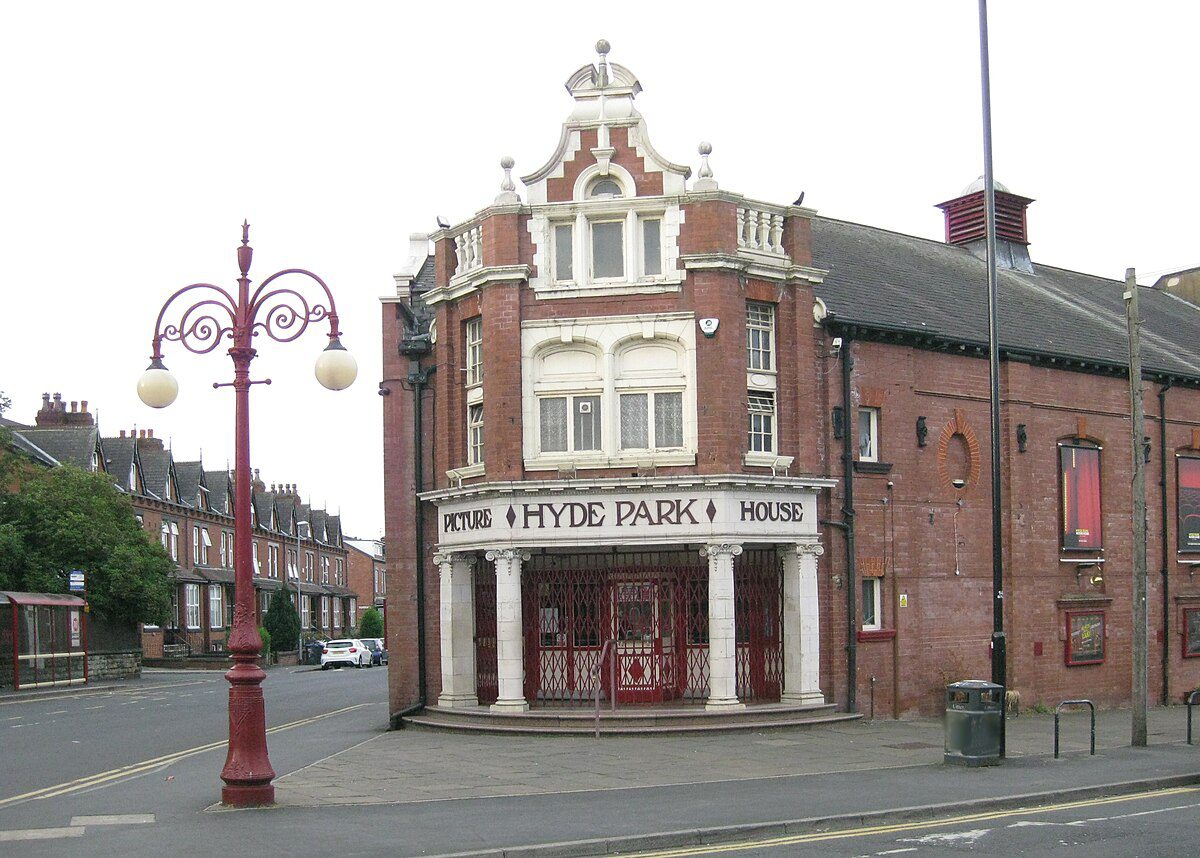
Do you enjoy visiting cinemas? For many, a trip to the cinema with friends or family, accompanied by a bucket of popcorn, is a delightful escape into the world of film. Leeds boasts several beloved cinemas, but today, we’re spotlighting a true architectural gem and historical landmark: The Hyde Park Picture House. Originally built for the hotel business, this Grade II listed building has transformed into one of Leeds’ most iconic cinemas. Learn more on leeds-trend.com.
The Building’s Origins
The cinema was originally designed in 1906 by architects Thomas Winn & Sons. Initially intended as a hotel for entrepreneur Henry Child, who already owned hotels in the city centre, the building’s fate changed when Leeds Corporation repeatedly denied Child a licence for a new hotel. As a result, in 1913, the building was repurposed into a cinema.
After the outbreak of World War I, the Hyde Park Picture House officially opened in Leeds with a seating capacity of 587. Known as the cosiest cinema in the city, its first film, Their Only Son, was described as a patriotic drama. In the 1920s, the cinema underwent renovations to accommodate sound films.
Challenges and Revival
In the 1950s, the cinema faced a decline in attendance, leading to a period of uncertainty. However, it eventually reopened to the public. In 1959, during the screening of The Big Hunt, a live elephant was placed in a cage outside the building as part of a promotional campaign.
Renovations followed in 1962, including the installation of new projectors. In 1984, a private charity, Friends of Hyde Park Picture House, was established to preserve and support the cinema. In 1987, the venue hosted the Leeds International Film Festival.
Despite these efforts, the cinema faced the threat of closure in 1989. Various initiatives were launched to save it, and in 1996, the building was awarded Grade II listed status.
The Modern Era
Today, The Hyde Park Picture House is a cherished cultural landmark in Leeds. In 1989, the cinema came under the management of Leeds City Council, which undertook restoration efforts to ensure its continued operation.
The cinema is one of only two original single-screen cinemas remaining in Leeds. It retains many of its historic features, including an outdoor ticket booth, a vaulted ceiling, and a balcony. Remarkably, it is the only cinema in the world still using functioning gas lamps. It even has a screen painted directly onto the wall, now hidden behind the modern screen. The cinema’s seating capacity has been reduced to 275 in recent years.
The Hyde Park Picture House showcases a wide variety of films, supports numerous cultural projects, and serves as a location for events, weddings, photoshoots, and even film backdrops.
The history and charm of The Hyde Park Picture House make it a true jewel of Leeds. We hope you’ve enjoyed learning more about this iconic cinema and its significance to the city.
Do you visit cinemas often? Share your experiences and favourite memories in the comments on our social media platforms. We’d love to hear from you!