Many films have been shot in the city of Leeds. This is not surprising, as our city is atmospheric, fascinating, and beautiful. However, special attention should be given to Traffic Crossing Leeds Bridge. This short silent documentary is the second film ever made in the history of cinematography. Moreover, it is one of the oldest surviving films in the world. Today, we will delve into the history behind this unique film. Read more about it on leeds-trend.com.
What Is Known About This Short Film
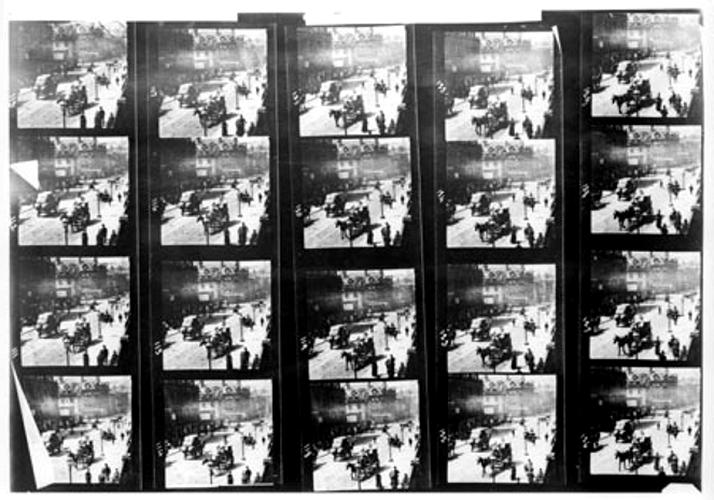
This phenomenal short silent documentary film has earned its place in the annals of global cinematography. It was filmed in 1888 by French inventor Louis Le Prince in the city of Leeds. Additionally, the film is considered the second-ever film in the history of cinema and one of the oldest surviving motion pictures in existence.
Traffic Crossing Leeds Bridge runs for only 2.76 seconds and consists of 65 frames. The footage depicts traffic moving across Leeds Bridge, a key transport hub in the city. However, the original version of the film was 20 frames shorter. Filming was conducted from a special vantage point, capturing an authentic urban landscape of the late 19th century.
The film was created by Louis Le Prince, who invented a multi-lens chronophotographic camera and made this film as part of his experiments with moving pictures.
The Filming Process
Le Prince’s camera used a roll of light-sensitive paper 54 millimeters wide, which was a groundbreaking innovation at the time. Thanks to this technology, Le Prince was able to create several short films, including Roundhay Garden Scene and Accordion Player.
Experts note that Traffic Crossing Leeds Bridge not only captured everyday life in Leeds in 1888 but also marked a significant milestone in the development of cinematography. It preceded by several years the inventions of Thomas Edison’s Kinetograph and the Lumière brothers’ Cinématographe, which emerged in the 1890s.
An interesting fact is that, due to its short duration and technical limitations, the film had no sound. The imagery was black-and-white and silent, yet this did not prevent the film from becoming a cornerstone for the future of cinema. The filming was conducted outdoors without additional lighting or special effects, making it a unique documentary testimony of its time.
Today, the film is preserved in the National Media Museum of the United Kingdom. It is available for viewing in archives, but its most significant contribution lies in showcasing the origins of cinematographic art—the ability to capture motion and life in real time.
In addition to Traffic Crossing Leeds Bridge, Louis Le Prince also filmed Roundhay Garden Scene in 1888. However, just two years later, Le Prince mysteriously disappeared while traveling by train in France. His body was never found, and for many years, his contributions to cinema remained largely unknown. The Lumière brothers, who held the first commercial film screening in 1895, are officially regarded as the “fathers of cinema.”
Nonetheless, the memory of Louis Le Prince and his contribution to cinematography is preserved in Leeds. A commemorative plaque has been installed on the bridge where the filming took place, and in 1930, the Lord Mayor of the city unveiled a bronze tablet at the site of Le Prince’s workshop.
This is the fascinating story behind the unique short film shot in Leeds. We hope you found this material informative and learned something new about your city.